


Project C.A.R.E. Recovery Spotlight: Ashley Farkas
Recovery Spotlight, a program of the Brattleboro Police Department and Project C.A.R.E., periodically recognizes someone in the community who is in recovery from substance use disorder. Recovery Spotlight is sponsored by Tito's Taqueria. Our next Recovery Spotlight honoree is Ashley Farkas. For many years, Ashley struggled with substance use disorder, which brought her to a dark place in life. After a decade of recovery, Ashley has built an amazing life and has many things to be grateful for. She now has a career in human services and a beautiful family. Here is part of her story and some words of wisdom from Ashley.
During active addiction, I felt like my life was not mine. The most important thing in my life at that time was to use — no longer for fun or to numb emotions, but for what felt like survival. I felt hopeless and stuck. I ended up with several charges and in a sober living house before finally reaching my all-time low: imprisonment. This was the turning point in my life. I wanted more from life, and I was finally ready to seek help.
The biggest tool for setting the foundation for a strong recovery for me was CBT (cognitive behavioral therapy). During CBT, I made the most heartbreaking discovery: that I would be an addict for life. But while reframing my learned criminal behavior, I retrained my brain and learned I still had a choice. I could choose active addiction or a life in recovery. That empowered me.
Continuing individual therapy was another one of my biggest tools. Remembering people, places, and things took time, and it was more difficult when it came to setting boundaries with family members who were still actively using. I went with the motto, “I cannot have anything in life if I do not put my recovery first.” I learned that spirituality and faith could guide me through early recovery and help sustain long-term recovery.
I worked full time, got connected with an LADC (licensed alcohol and drug counselor), did self-work through prayer, joined local church groups, and started step work through AA. This helped me to keep busy and connect with the recovery community in Brattleboro. If I struggled with cravings, I would allow myself to process my emotions instead of acting on cravings. I learned they pass, just like feelings do.
Today, after 10 years sober, life is different from early recovery. I want to share this message with those who are debating whether recovery is worth it and wondering whether living with addiction gets easier. Yes, it really does. Recovery is so easy compared to active use. Addicts are some of the strongest people there are. Hear me out: the willpower to do what you need to do — to not be sick — sticks with you. That is yours, not your addiction.
That means you can utilize that same drive to do anything you put your mind to — and do it faster and better than anyone else in the room. The amount of peace you feel is immense. You gain clear thinking, self-esteem, strength, self-love, and power. After sustained time in recovery, your brain starts to regulate, and cravings do not stay as strong as they were in early recovery. You can do this.
For me, a healthy lifestyle is necessary, and that includes working out, enjoying hobbies, attending therapy weekly, and talking to my higher power. Because of recovery, I have been gifted with the title “mom.” This has been and will always be my biggest joy of recovery. Finding my purpose was one of the biggest achievements my recovery has given me — to have built a career in the helping field and to be able to give back to those still suffering. Today I love, smile, laugh, hurt, and cry. I can feel. This is something addiction steals. We cannot numb the bad feelings without losing the good feelings. I can proudly say that I am living the life I choose. This is MY life.
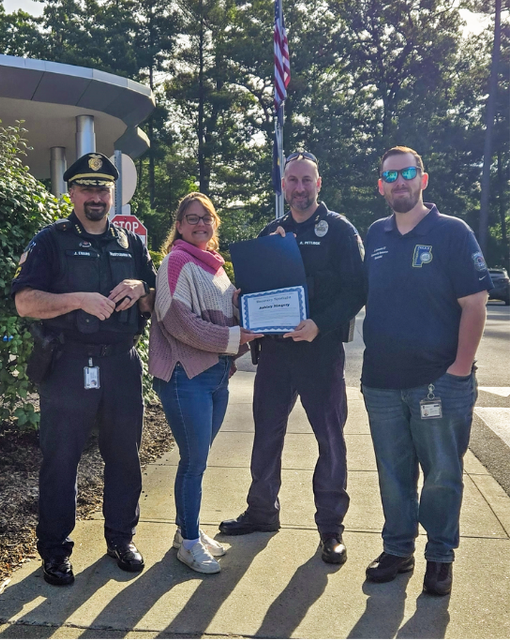
Pictured above: Brattleboro Police Chief Jeremy Evans, Ashley Farkas, Asst. Chief Adam Petlock and Community Resource Specialist Justin Johnston.
Project C.A.R.E. (Community Approach to Recovery and Engagement) is a partnership aimed at reducing the impact of opioid use on our community. The mission is to help people living with addiction achieve and maintain recovery. Learn more at Brattleboro.gov/projectcare.
Recovery is a deeply personal and unique journey for each individual. The path to healing and well-being can vary significantly depending on personal history, the nature of the condition, available support systems, environmental influences, and other factors.